I’ve been mulling it over in my head for a couple of weeks. What’s a ‘high level’ degree? What could constitute a ‘rip off’ degree? And I posted this on LinkedIn & it literally went up in flames!
I was one of the first people to study for a new degree which was considered ‘Mickey Mouse’ in 1986 – Communications Studies at the University of Sunderland (it was a Poly then, of course) and it wasn’t my first choice, but I failed my French A Level in a fantastic but unexpected style so all of my first choice Universities (Media Studies with French) suddenly left the building and I found myself trying to secure a place, on a wet and windy day, in a telephone box in the middle of Smethwick, Warley, West Midlands, through Clearing.
Of course, I was never supposed to be there. University was never designed for people like me, that’s what I’d always been told – especially by my family. My mum and dad (who separated when I was 6) both left school at 15 barely able to read or write, and now I was living in one of the most deprived boroughs in England, being brought up on one of the roughest Council Estates in Sandwell, often to be found hiding behind the couch when the rent man came to call.
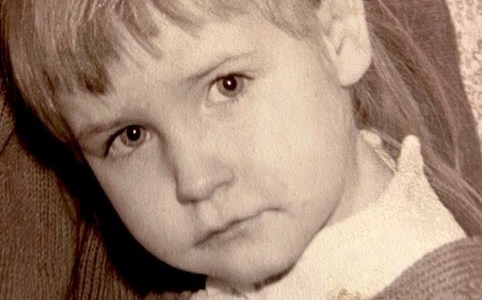
My start in life hadn’t been great. There was no path to university for people like me – let alone being able to consider what was high or low level for a degree to study. I was born in Scotland, my dad was a painter and decorator, my mum was pregnant at 16 with three young children by the time she was 20. She spent her life waitressing, cleaning other people’s houses and working in a factory (all at the same time). We were the working classes. When she left my dad, she took her three kids back to Birmingham where she was from and we spent a week living in a bus shelter in the City Centre (Colmore Row to be precise) before being moved into a hostel for women (Digbeth – now the Paragon Hotel!). It was one of the first women’s hostels in the country. A very sad and sorry place to be, full of women who had been beaten, battered, prostitutes, drug addicts. We slept four to a room (it had formerly been a prison and the rooms were still furnished as such with two sets of bunk beds and bars on the windows). It was a poor start. Despite my strong Scottish accent, I was farmed out to several schools and I did well. I was a strong reader, finishing adult books at the age of 5, and already writing a bit, too. It was my first love. The place I disappeared to. Because life was difficult.
We were housed in a maisonette in Northfield, a one parent family, mum working all the hours, and we brought ourselves up. My sister and brother went off the rails, my mum met a string of terrible men, drunks, handy with the fists, and I spent a lot of time cleaning up her blood and picking up her teeth. I had a lot of ‘uncles’. We didn’t have much food to eat. The electricity got cut off quite a lot. We often had to sit in front of the gas fire to warm our feet. And everywhere around us, people were getting evicted. Poverty was rife. But the one thing that saved me? School. I even got a bottle of milk every day, which is something we could never afford at home. But school. And teachers. Saved me.
Still, university was never an option, but I was quite good at learning. Even though I was probably filed under ‘neglect’ at school, I wore charity shop clothes, I didn’t wash much, I didn’t get a toothbrush until I was in my teens and bought myself one, I was often seen by the nit-nurse. Our house wasn’t clean. So I wasn’t clean. I shared a bed with my sister for a while and she used to wet herself at night. We only got to bathe once a week so I never went to school fresh and clean. But I learned.
So, what’s this got to do with high level degrees? The thing is, I was a reader and a writer, and whilst my education was already nurturing me and shaping me, and the teachers were phenomenal, there was absolutely no careers advice for someone like me (except be a teacher, or a journalist, neither of which I wanted to do because I hate public speaking, and I’m far too nice to doorstep people and write horrible things about them).
So I navigated myself very well through the education system, and by the time I got to O Levels, people started to recognise that I had a talent and a skill for writing (hated Maths, couldn’t see the point, never passed a Maths exam) and teachers really championed me and started to suggest that I should absolutely try to go to university. I’d never thought about it. While I was studying at school, I was still mopping up blood at home (no-one knew about this, it wasn’t something that was openly talked about in the 80s) so I never thought that university would be a place for me. It wasn’t for people who had experienced domestic violence, divorce, alcoholism. It was for the other people. The rich ones.
But I continued to fly at school, I worked in the library at lunchtime after my free school meal, I was a Prefect and worked at all the events I could and I absolutely loved my school days – every one of them. And then I started to believe that maybe I could go to university. There weren’t many of us at my school who had these aspirations, but I had very good teachers offering me support. Because they believed in me. I could study A Levels and I could study for a degree. Thanks to my teachers. I started to believe. I didn’t know how I could make it work, there was no support from my family as no-one had ever left school with any qualifications, let alone moved up further in the education system, and we had zero money. In fact, the debt collectors were upon us every day as my mum couldn’t really manage money (or life for that matter).
But it started to be a real possibility as clearly I excelled at English. What could an English degree do for me? I had no idea. I just wanted to write for a living. And apparently there were no jobs where you could do that. Anyway, never one for giving up, I went on to study for my A Levels and then realised I qualified for a single-parent grant and before I knew it, I was applying to university to study Media/French/English/French (there was a bit of me that needed to escape to a different country at some stage).
As it turned out, failing my French A Level was a godsend. I ended up on what everyone was calling a Mickey Mouse course at the time, one of the first of its kind, at the other end of the country. And what an eye-opener it all was for a working-class girl from Smethwick.
Suddenly I was living in an environment where I was independent (having to make £750 a term stretch was no mean feat), I was making new friends (ones that came from a completely different background to me – posh folks, if you like – one even had a car bought for her for her 18th birthday!). I didn’t really need to learn about life because I was pulling a shopping trolley full of dirty clothes down a big hill to the launderette when I was 7 and upwards. I also did the shopping, cleaning and cooking at home because mum was always at work with her three jobs and my sister and brother were AWOL. But it was such a revelation to be able to study without feeling guilty, to read as much as I liked, and I started to write a novel. Would it really have mattered if I hadn’t learned a thing on my degree because I was learning so much about myself, and suddenly the opportunities were endless and life seemed limitless. So is going to university really just about learning enough to be able to get a graduate level job (what does that even mean?).
And my degree was wonderful! I learned all about theories of communication, how human beings learn how to communicate, how we are brought up with preconceptions, how we learn to be a girl and a boy, we were given practical lessons on making videos and radio news items, we learned about popular culture, we worked on the Poly newsletter, and we were shown how art, philosophy and culture contributed to how we learn and how we behave.
It was my vision of heaven.
Low value degree?
For a low value, working class girl who thought she would never have any value, it changed my whole life.
I had no concept of what a graduate-level job was, I just knew I wanted to use my skills in writing as a career and university opened up the options, and the doors, for me.
Before I knew it I was working as an Administrative Assistant in a very busy press office for a massive bus company carrying over a million passengers a day and I worked my way up to Assistant Press & PR Officer, Press & PR Officer and then Communications Manager. I was earning very good money by the time I was 29. Certainly much better than anyone had ever thought I would, or more than anyone ever expected I would, even myself. And I suffered terrible Imposter Syndrome. Would never put myself forward for promotion. Still don’t like to think I might be classed as being ‘above’ anyone. My working-class roots just didn’t allow for that. But what I could do was prove my worth with my writing and organisational skills and a limited amount of confidence.
My family still don’t get it. And the generations that followed me (generational curse) still followed the pattern set out for them. It was just me against the rest of the world. I was the first at university, the first to pass a driving test, the first to buy a car, the first to circumnavigate the globe. In PR, firsts are always something to be celebrated!
I went from low level to high level, and I’m now Head of Content and Communications at a university, telling stories like mine to people who might not believe that they can ever achieve what’s in their heart because they are surrounded by people who put up invisible barriers. And those people make up our government. And that’s shocking, and shoddy and shit.
And I’ve had a good life because of it, a better life than I would have had without it. I paid my mortgage off in my early 50s, I travel extensively, I have no money worries, I own my car and I’ve always worked in a profession that I love, the foundation of which built my career.
So, people like me. We need to tell our stories. We need to document our journey. We need to stand up and be counted. Because if we don’t value ourselves, who else is going to do that for us?
People want to go to university for many reasons, and people are paying for that privilege themselves now or they have great employers that pay for them, and they are getting much more out of it than just finding a ‘suitable’ career that pays loads of money. Life is much more than that, isn’t it? And that’s the thing, if we place too much emphasis on earning money, and getting the ‘right’ kind of job, we are diluting the world. Our children and our communities deserve so much better. They should have the right to choose their own futures, not being funneled down some tube where they are spat out in the right place to do the right thing.
We should always, always be learning lessons. No more so, than right now.
Tell your stories and be heard.

 Mags Winthrop Blog