
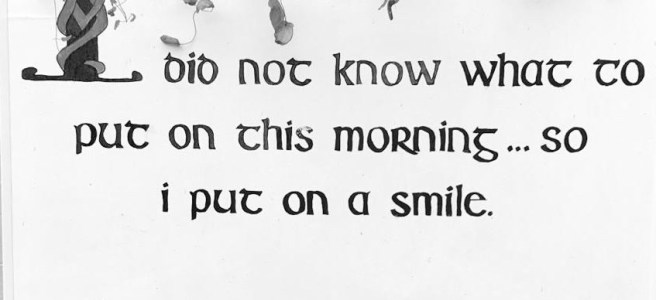
I guess that throughout all our lives we put on some kind of performance – depending on what situation we find ourselves in. To some extent we all play a part, in something, but it’s rare that outside of the workplace our performances are managed or, indeed, appraised.
So why should it be important to an organisation to appraise people on their performances? When in life, this just doesn’t happen. Yes, we can form opinions about how people behave outside of the workplace, and we can take action as a result of that, but we don’t assess and measure them in quite the same way. Maybe if we did we would get the measure of them properly?
In my relatively new management role this year, I’ve looked at the annual appraisal process from the other side of the fence – counting the value, and the cost, of what we achieve in the workplace from an entirely new perspective. From a different angle. I’d always thought that objective setting and KPIs, and measuring performance, was a load of nonsense amounting to empty promises when there was no monetary gain or reward at the end of the corporate rainbow, where the only bonus was a pat on the back or a kick up the arse.
But having just been sat on the other side of the fence I began to realise that performance management is actually quite meaningful and, if approached from a humanistic perspective, can radically alter the direction of travel for employees who are actually real people at the end of the day (not just numbers as HR might have us believe).
The most important thing about an annual appraisal I found was taking the time to sit down and think about your achievements throughout the past year. This was enlightening for the people I work with. I can’t ever bring myself to call people my team, or even for me to say the people I manage – I don’t think I manage people, I think I manage systems and processes and I facilitate the work of the wonderful, creative people I spend my working days with, helping everyone to navigate through the messy, cluttered noise of comms that has a habit of bashing you on the head from all angles. A bit like Space Invaders on speed.
Just that simple exercise of taking time to focus on what efforts they made & what they achieved and how successful they were, as well as balancing it with what could have worked better, what could help to improve things – just that thought process is invaluable to an organisation. How can you truly measure the personal efforts that people go to on a daily basis to achieve what they do by playing a numbers game? Did you hit targets? I would shrug. Does it matter? Did you achieve our objectives? Well, by turning up every day with a smile and a will to put in effort I’d have to give you a great big tick ✔️
As a business, what do we need, what do we want to grow? We want to grow our people. And that means getting to the heart of what they do, finding out what really drives them and really makes them tick. It’s about both hearts and minds. About listening and talking and really noticing what has shaped the person in front of you and what steps could be taken to refine that shape.
I couldn’t help but draw on my counselling skills during this process, too. You learn so much about listening when you are training to be a counsellor. They call it active listening. And I don’t think many people do this, especially in the workplace where actually it’s of paramount importance. I think people tend to listen, but they don’t really hear. The annual appraisal process is actually a really constructive process where you make time to sit with the people you work with every day and view them from a different perspective. Where you can encourage them to think introspectively about the role they are playing, about where they fit in the bigger picture, about whether those things affect them emotionally and, if they do, what they can do to either nurture that or take control of it.
I found this new journey fascinating. And then I was appraised myself, probably for the first time, by someone who also has those type of people-skills and, despite me having been round the block (many times) working in comms for over 30 years now, I was left with a number of positives. Being encouraged to keep achieving, being thanked for the hard work and commitment, and being recognised for performing consistently in a very challenging environment.
And being asked ‘do you like to break the rules’? Let me think about that one…
And isn’t this the crux of appraisals and performance management (which is a really corporate word that doesn’t do itself justice). Recognition, reward (not necessarily monetary) and recapping all that you have achieved in a place where you spend an awful lot of time.
Whilst it is a tick-box exercise, I guess – isn’t it great to sit and look at all those ticks when, throughout the year, you just keep blasting the invaders without really recognising and celebrating what great work you do, and what you achieve, by turning up and being physically and emotionally present.
For me, work should be enjoyable and manageable and shouldn’t ever cause any angst and stress. Yes, you can face challenges, and you can deal with difficult people, and sometimes it’s completely overwhelming – particularly when you’re in a period of crisis comms or when you’re facing personal challenges that people may or may not know about – but it should never feel hopeless, it should never make you feel sad, and it should never stunt your growth.
And sitting with people on the other side of the fence, being the person responsible for ensuring that all of those tick boxes I’ve just talked about are filled to overflowing (the human face of being appraised), has been a wonderful and enlightening challenge for me.
Because people aren’t just machines that need to be processed. People are much more than the sum of who they are at work and they can bring so much more to the workplace if they feel comfortable and confident in life generally. And it’s not just a place for work. People fall in love there, people make friends there, people learn much more about themselves in the context of the workplace. And mostly we spend a lot of time there!
Indeed, many of my lifelong friendships were made in the workplace and I even fell in love there once.
Managing performance? Get the right cast in place, ensure that we all have the right script, learn our lines, deliver it to the audience every single day that we feel motivated and able and happy, and never, ever forget to take a bow.
Now that’s a standing ovation in my book.
Hear, hear.

 Mags Winthrop Blog